
Analysis & Service Design
User / Process Flow documentation
Wireframe / UI Design
Project & Development Support
Background
Project Elevate was a year-long digital transformation initiative for Globus Family of Brands (GFoB), encompassing Globus, Cosmos, and Avalon Waterways. The project formed part of a broader organisational strategy to modernise legacy systems and establish a future-ready digital ecosystem using OutSystems.
As the first major customer-facing transformation programme, Project Elevate focused on redesigning and consolidating the traveller experience across web and mobile platforms. The goal was to replace fragmented customer touchpoints, outdated interfaces, and document-heavy communications with a unified experience that supports travellers before, during, and after their journeys.
My Role
My role combined Business Analysis, UX Design, Service Design, and Product Discovery responsibilities. I worked closely with stakeholders across the United States, Switzerland and South Africa to define requirements, map customer journeys, create user flows and wireframes, support delivery teams, and ensure business goals remained aligned with user needs throughout the project lifecycle.
The Challenge
Before Project Elevate, the traveller experience was fragmented across multiple systems and communication channels. Guests received large PDF travel packets through email, often multiple times as information changed. While updates were distributed, travellers had no clear way of understanding what had changed between versions. Critical information was scattered across emails, downloadable documents, a legacy customer portal (MySite), and a separate mobile application used only during travel.
This created several challenges:
-
Information overload during trip preparation
-
Difficulty identifying important updates
-
Missed guest action items and confirmations
-
Limited self-service functionality
-
Inconsistent experiences between web and mobile platforms
-
Increased support dependency for routine booking changes
For many travellers, particularly an older audience with varying levels of technical confidence, navigating their travel information became unnecessarily complicated. The challenge was not simply redesigning a portal. It was creating a seamless digital journey that brought together complex travel information, operational processes, and communication touchpoints into one coherent experience.
Understanding the End-to-End Journey
One of the first activities was facilitating discovery workshops with Product Owners and Subject Matter Experts across the business. Through stakeholder interviews, platform reviews, customer feedback analysis, and collaborative workshops, I helped create a Customer Journey Blueprint that became the foundation for the entire project.
The blueprint mapped both the current-state and future-state traveller experience across eleven journey phases:
-
Booking Confirmation
-
Account Creation
-
Profile Setup
-
Contact Support
-
Access Trip Information
-
Guest Registration
-
Book Excursions
-
Manage Payments
-
Arrival Day
-
On-Trip Experience
-
Post-Trip Reflection
Rather than functioning as a traditional journey map, the blueprint combined customer journeys and service design principles to visualise customer actions, business processes, supporting systems, and operational dependencies. This artifact became the project’s North Star, aligning stakeholders across departments while exposing service gaps, integration challenges, and opportunities for improvement.

The Approach
Discovery & Analysis
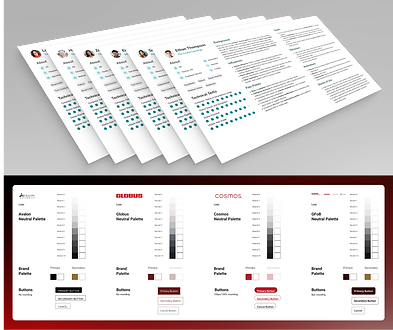
I worked closely with Product Owners, operational teams, marketing stakeholders, and executives to understand both customer needs and business objectives.
Activities included:
-
Stakeholder workshops
-
Requirement discovery sessions
-
Existing platform analysis
-
Customer feedback reviews
-
Feature Planning
This work established a shared understanding of how travellers interact with the business across their entire journey.
Translating Complexity into Structure
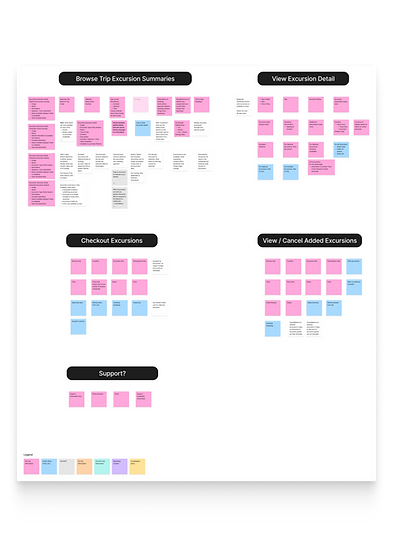
A significant challenge throughout the project was organising large volumes of information into an experience that felt simple and intuitive.
Travellers needed access to:
-
Booking information
-
Flights
-
Travel documents
-
Excursions
-
Notifications
-
Daily itineraries
-
Registration requirements
-
On-trip communications
The challenge was determining not only where information belonged, but when it should appear within the traveller’s journey. Working alongside stakeholders and technical teams, I helped structure content around traveller goals and trip milestones rather than internal business systems.

Requirements to Delivery
As features moved through discovery and design, I was responsible for:
-
Requirements gathering
-
User story creation
-
Acceptance criteria definition
-
Process mapping
-
User flow creation
-
Wireframing
-
Feature prioritisation
-
Sprint support
-
Stakeholder alignment
For complex requirements, supporting user flows and wireframes were created to visualise intended experiences before development began. Once requirements were refined, they were presented to Product Owners, SMEs, and development teams for review before entering sprint planning. Throughout delivery, I acted as a bridge between stakeholders and development teams, supporting implementation, clarifying requirements, and facilitating feedback loops during testing.
Key Features
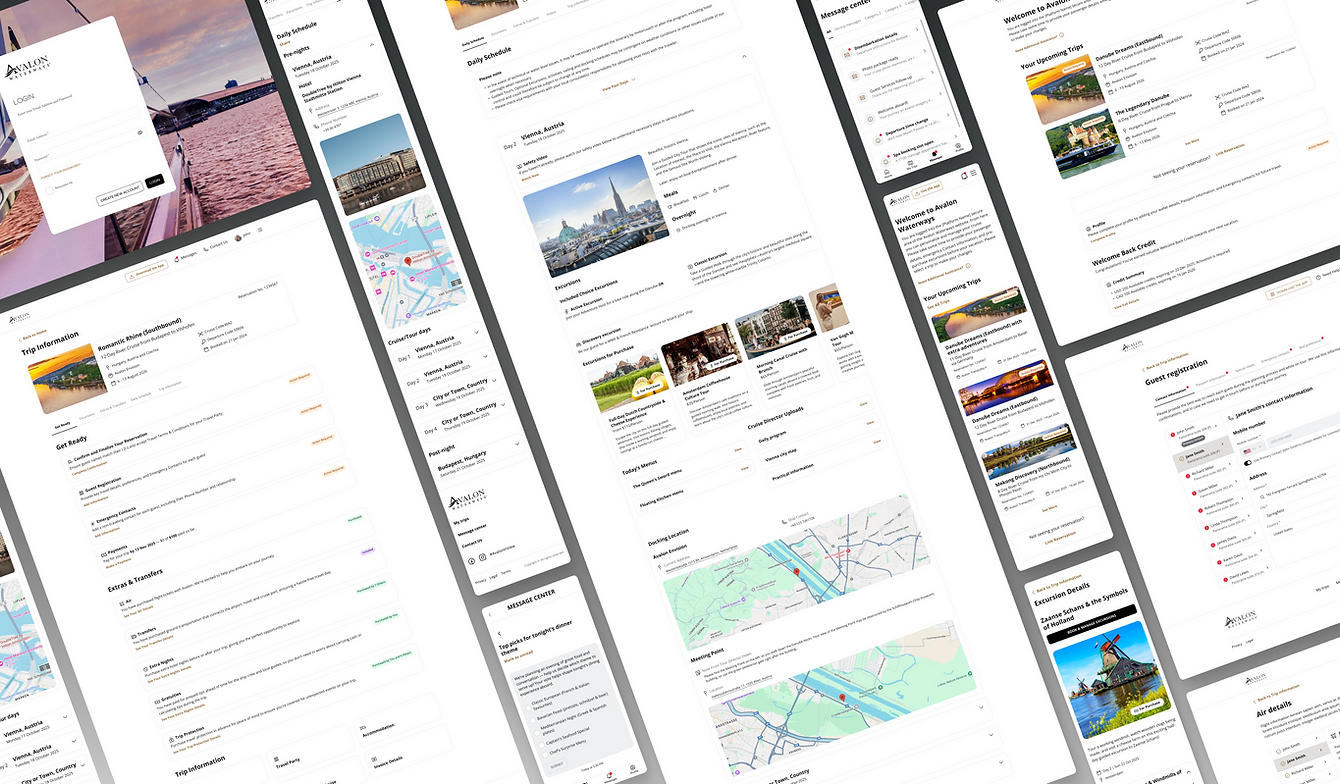
Throughout the project I contributed to the design and definition of several core platform experiences, including:
-
Booking Management: Providing travellers with a central location to access and manage their booking information.
-
Guest Registration: Simplifying pre-trip requirements and ensuring critical traveller information was completed before departure.
-
Guest Action Items: Highlighting outstanding tasks and required actions to reduce missed confirmations and registration issues.
-
Trip Information: Consolidating important travel information into a single accessible experience.
-
Excursions: Allowing guests to browse, review, and book available excursions.
-
Daily Schedule: Creating a dynamic itinerary experience that supports travellers while on their journey.
-
Notifications & Communications: Replacing reliance on email with timely, contextual communication delivered directly through the platform.
-
Profile Management: Providing guests with greater control over their personal information and preferences.
Constraints & Challenges
Like many enterprise transformation projects, the experience was shaped by several constraints.
-
Legacy System Dependencies: The platform integrated with eight existing systems, each with varying levels of API maturity and data availability. In many cases, design decisions were directly influenced by the information available through integrations.
-
Stakeholder Alignment: With more than ten SMEs, multiple executives, three Product Owners, and delivery teams involved, maintaining alignment required continuous collaboration and communication.
-
Responsive Content Design: Travel information can be extensive and highly detailed. Ensuring that complex content remained accessible and usable across desktop and mobile experiences required ongoing iteration and prioritisation.
-
Balancing Ideal vs Feasible: Many future-state concepts needed to be balanced against technical limitations, integration constraints, and delivery timelines. This required continuous collaboration between UX, business, and development teams to deliver the best possible experience within project realities.
The Value Add
Project Elevate successfully established a unified traveller experience across web and mobile touchpoints.
The solution addressed key pain points identified during discovery by:
-
Consolidating fragmented experiences into a single ecosystem
-
Improving visibility of important traveller information
-
Providing more timely communication throughout the journey
-
Reducing information overload
-
Creating clearer pathways for completing required actions
-
Supporting travellers before, during, and after their trips
Usability testing conducted by an independent consultancy validated many of the project’s design decisions, with feedback confirming that major traveller frustrations had been successfully addressed. Stakeholders across the organisation responded positively to the solution and viewed the platform as an important milestone in GFoB’s broader digital transformation strategy.
The Insights and Lessons Learned
Project Elevate reinforced the importance of viewing UX as more than interface design.
The greatest challenge was not creating screens. It was understanding a complex ecosystem of people, processes, systems, and information, then translating that complexity into an experience that felt intuitive for travellers.
The project strengthened my skills in:
-
Enterprise stakeholder management
-
Service design
-
Product discovery
-
Cross-functional collaboration
-
Large-scale journey mapping
-
Balancing user needs with technical constraints
Most importantly, it demonstrated how thoughtful UX and Business Analysis can work together to transform complexity into clarity.